Teachers, not just equipment
The school's own teachers are trained and supported, so the lab runs without an outside dependency.
For CSR funders, foundations and NGOs
Grobots works with CSR teams, foundations and NGOs to bring AI, robotics and STEM labs to government and under-resourced schools, with the teacher training, curriculum and outcome reporting that turn equipment into learning. It is proven at scale: 40 government schools in Nagpur through the partner-led Umang programme.
The real problem
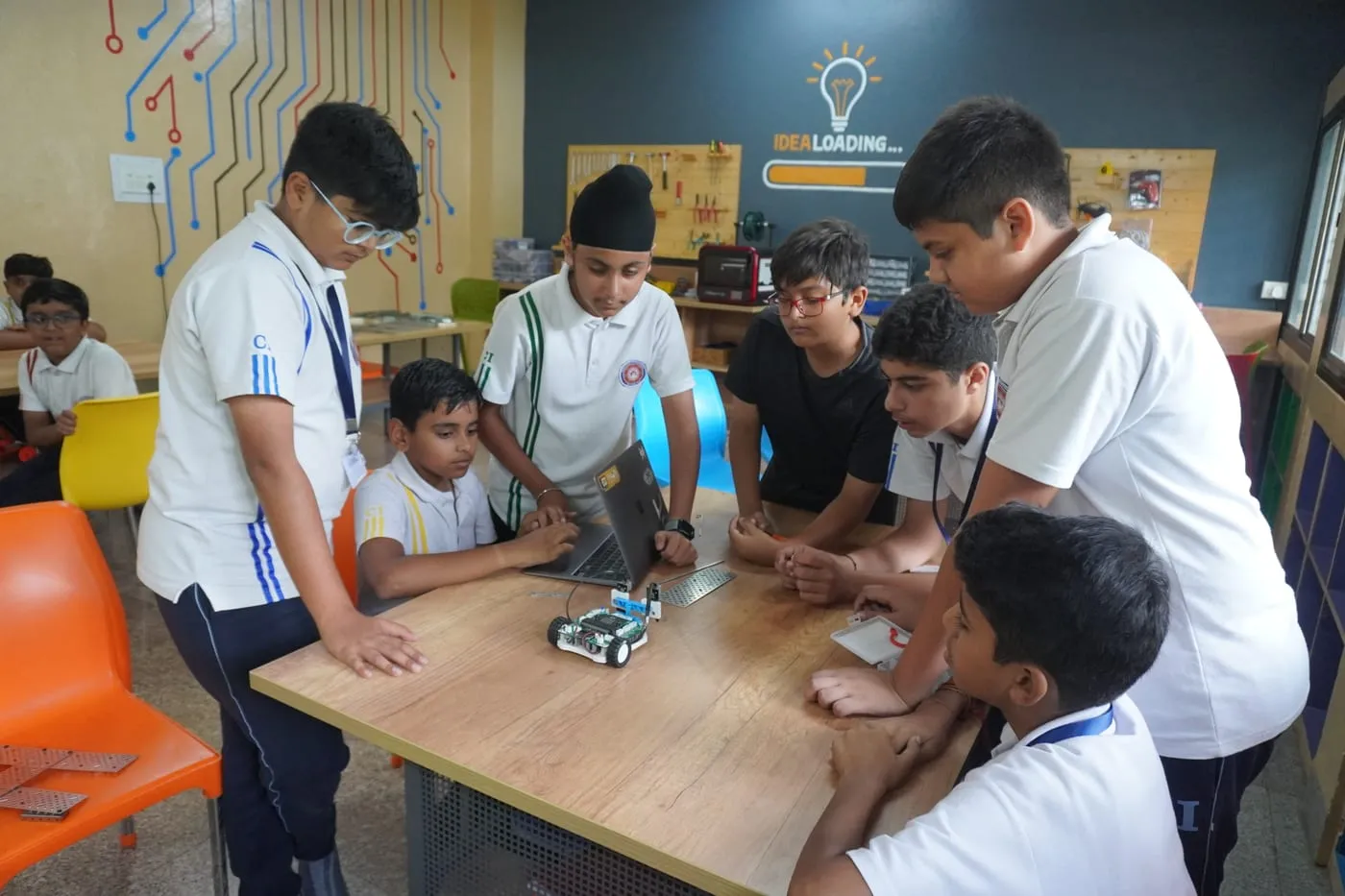
The equipment arrives, the photos get taken, and then the lab goes quiet, because nobody was trained to teach it and there was no curriculum to follow.
A donated lab is easy. A lab that's still teaching three years later is the real outcome. A Grobots programme is designed so the impact compounds instead of fading: the school's own teachers are trained, the Virtual Master Trainer gives them a video for every lesson, and the curriculum gives every grade something to do.
Your CSR funds buy not a one-time donation but a working, measurable, multi-year programme, with the documentation your board and your auditors expect.
The school's own teachers are trained and supported, so the lab runs without an outside dependency.
20–24 sessions per grade, every year, mean the lab is taught, not stocked. Usage is the real impact metric.
Attendance, activity and outcome documentation suitable for CSR impact reporting and audit.
Itemised documentation from Grobots Future Technology Private Limited, ready for CSR committees, auditors and public-fund processes.
Why it works where it's hardest
A lab that thrives in a well-staffed private school can still go dark in an under-resourced one. Three things decide whether it survives.
Language
Lesson content in English, Hindi and Marathi, not only English. In a government school, that's the difference between a child who codes and a child who only watches.
Devices
The software runs on Android tablets, existing Windows PCs or a low-cost Raspberry Pi, not a new computer lab. AI activities work offline. That keeps the cost per school down, so your funding reaches more schools.
Staffing
Where a school has no one free to run the lab, Grobots can place a trained resource person on campus, so the programme never stalls waiting for a teacher, the most common reason donated labs stop.
Impact at scale
The clearest test of a CSR model is whether it works across many schools at once, not just one showcase site.
CSR and government · Nagpur
40
government schools reached through the Umang programme in Nagpur.
The Umang programme, Nagpur
Delivered with the Nagpur Municipal Corporation and a lead partner organisation, and funded through CSR, the Umang programme brought structured robotics and STEM learning to 40 government schools: the kind of rollout where teacher training and a shared curriculum matter most. Grobots provided the kits, curriculum and trainer support behind the programme, alongside the lead partner.
Read the Umang Nagpur case study →The team behind Grobots: 12+ years in school robotics and tinkering, 300+ private schools and 1,500+ government schools, including Atal Tinkering Labs in 36 Andhra Pradesh residential welfare schools and 24 Arunachal Pradesh state schools. More case studies →
What a CSR programme includes
You fund it and choose the schools and outcomes. Grobots delivers everything else.
From entry-level robotics to full STEM and ATL labs, matched to each school's grade range, space and the programme's scope.
The schools' own teachers are trained onsite and supported through the Virtual Master Trainer, so the programme doesn't depend on outside staff.
Grade-wise lessons, printed workbooks and a video for every lesson, with content in English, Hindi and Marathi, so the lab is taught week after week.
Attendance, activity and outcome documentation built for CSR boards, auditors and government partners, at a cadence agreed at the start.
Virtual and physical competitions give students a stage, and give funders results they can show beyond a launch photo.
Grobots is accountable for delivery across every school in the programme, directly or behind your chosen implementation partner.
Ways to engage
CSR programmes come in every size. The model scales; the quality of delivery doesn't change.
1
school
Fund a complete lab for one school: a focused, high-visibility CSR project with a clear before-and-after.
5–20
schools
A cluster of schools under one programme, with shared training, one curriculum and consolidated impact reporting.
20+
schools
A large-scale deployment with a government or municipal partner: the Umang Nagpur model, replicated for your region.
Funding a lab in a government school through the state or the ATL scheme? See Grobots for government and ATL schools.
What CSR teams ask us
By training the school's own teachers and giving them the Virtual Master Trainer, a step-by-step video for every lesson, plus a grade-wise curriculum of 20–24 sessions per grade with printed workbooks. Usage, not equipment count, is the metric we design around, and it is what we report on. Where a school has no one free to teach, a trained Grobots resource person can run the lab.
Yes. Grobots Future Technology Private Limited provides clean, itemised documentation for every school in the programme, suitable for CSR committees, boards, auditors and government processes. We agree the documentation and reporting format with your team at the start of the programme.
Yes. The Grobots STEM Lab is built to the Atal Tinkering Lab framework, and CSR funds can establish or top up an ATL, alongside or instead of the AIM grant. The team behind Grobots has set up ATLs in 36 Andhra Pradesh residential welfare schools and 24 Arunachal Pradesh state schools, and we help structure the programme accordingly.
Attendance and activity logs, outcome summaries and programme documentation across all participating schools, formatted for CSR impact reports and partner reviews. We agree the reporting cadence at the start, so your committee sees a working lab and real usage, not just a launch photo.
Yes. Many programmes are delivered in partnership, as Umang Nagpur was: 40 government schools, partner-led with the Nagpur Municipal Corporation and funded through CSR. Grobots can sit behind your chosen partner, providing the kits, curriculum and trainer support, or deliver the programme directly.
There's no fixed minimum. Programmes range from a single sponsored school to a city-wide rollout. Tell us the number of schools you want to reach and the outcomes you're after, and we'll scope a programme that fits and share an indicative proposal within 48 hours.
Tell us the schools you want to reach and the impact you're after. We'll scope a programme and share an indicative proposal within 48 hours.