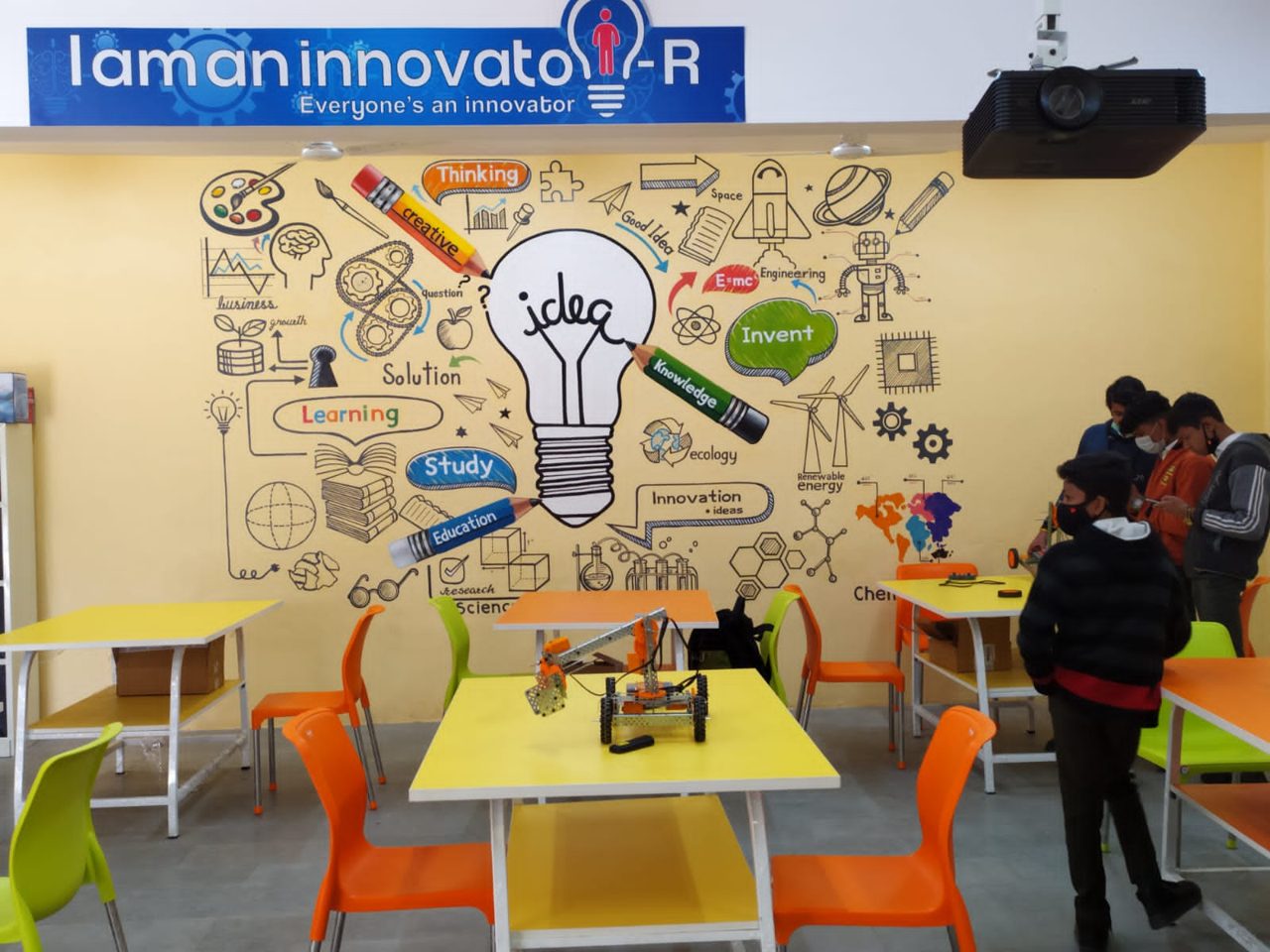
STEM Lab Design for Schools: A 2026 Setup Guide
Good STEM lab design starts with how students will move and work, not with the equipment catalogue. Get the zones, power, storage and sightlines right first, and a modest kit list will out-perform a lab that spent twice as much but was laid out like a computer room.
This guide walks through STEM lab design for Indian schools in 2026 — the zones a working lab needs, realistic space and budget, the equipment that earns its place, and the design decisions that quietly decide whether the room is busy in Year 2 or locked and gathering dust. It is written for principals, ICT HODs and administrators planning a build, and it deliberately focuses on layout and use rather than a shopping list, because the shopping list is the easy part.
What a STEM lab actually is (and how it differs from a science lab)
A STEM lab is a single, flexible room where science, technology, engineering and maths come together through hands-on projects — building, coding, testing and iterating — rather than through textbook demonstrations. A traditional science lab is organised around fixed experiments and a demonstration bench. A STEM lab is organised around student teams making things: robotics, electronics, 3D design, simple fabrication and coding, often in the same session.
This matters for design because the two rooms want opposite things. A science lab wants gas, water and a front-facing layout. A STEM lab wants clear tables, power everywhere, movable furniture and storage that lets half-finished projects survive until next week. If you inherit a science lab and simply add kits, you usually get a cramped compromise. Design the room around the work instead.
STEM labs also sit alongside — not inside — the CBSE mandate. If your school is planning for the Composite Skill Lab requirement, read our companion guides on the Composite Skill Lab and how it compares in our Composite Skill Lab vs AI & Robotics Lab vs ATL breakdown. A well-designed STEM lab can be the physical shell that later satisfies the mandate; the reverse — retrofitting a compliance-only room into an engaging STEM space — is harder.
The three-zone layout every working STEM lab uses
The most reliable STEM lab design splits the floor into three zones so a full class can rotate without colliding. Keep the boundaries loose — furniture, not walls — so the room can flex between a 30-student class and a small club.
1. Build & prototype zone
Furniture: large flat tables (ideally with a whiteboard or laminate top), seating 4–6 per table for team work.
Purpose: assembling robotics kits, electronics, model-making, and the messy hands-on core of every session.
Design rule: leave real elbow room — a kit spread across a table plus a laptop needs more space than schools expect.
2. Coding & digital zone
Hardware: laptops or desktops capable of running block-coding, CAD and simulation — an Intel i5-class processor with 8GB RAM is a sensible floor.
Network: reliable Wi-Fi with a genuine wired backbone; aim for a stable connection of at least 50 Mbps so a whole class can download firmware and assets at once.
Design rule: put screens along a wall or in a cluster so a teacher can see every display at a glance — sightlines are a classroom-management tool.
3. Display & presentation zone
Setup: a screen or panel and some open floor where teams demo working projects and pitch ideas.
Purpose: the “science-fair” corner that keeps finished work visible — the single cheapest way to keep students motivated.
Design rule: make at least one shelf a permanent home for completed builds. A lab whose output is visible stays alive; a lab that clears its tables every Friday feels like it never happened.
Space and infrastructure requirements
Space is the constraint most schools underestimate. Below are working ranges for planning — treat them as design targets, then adapt to the room you actually have.
Combined / compact lab: roughly 400–600 sq ft — workable for a shared or smaller cohort.
Dedicated STEM lab: roughly 600–1,000 sq ft for a full class of about 30, so three zones and circulation all fit.
Power: multiple points on every workbench, not one socket per wall — charging kits and laptops is the number-one bottleneck.
Storage: lockable cabinets for kits and half-finished projects. This single item does more for longevity than any premium tool.
Safety: basic gear and clear rules the moment you introduce soldering, 3D printing or any cutting.
Connectivity: strong Wi-Fi plus a wired backbone; budget for a stable link of 50 Mbps or better.
STEM lab equipment: what actually earns its place
Buy for a progression of skills across grades, not for a photogenic pile of gadgets. A practical starter set covers four groups:
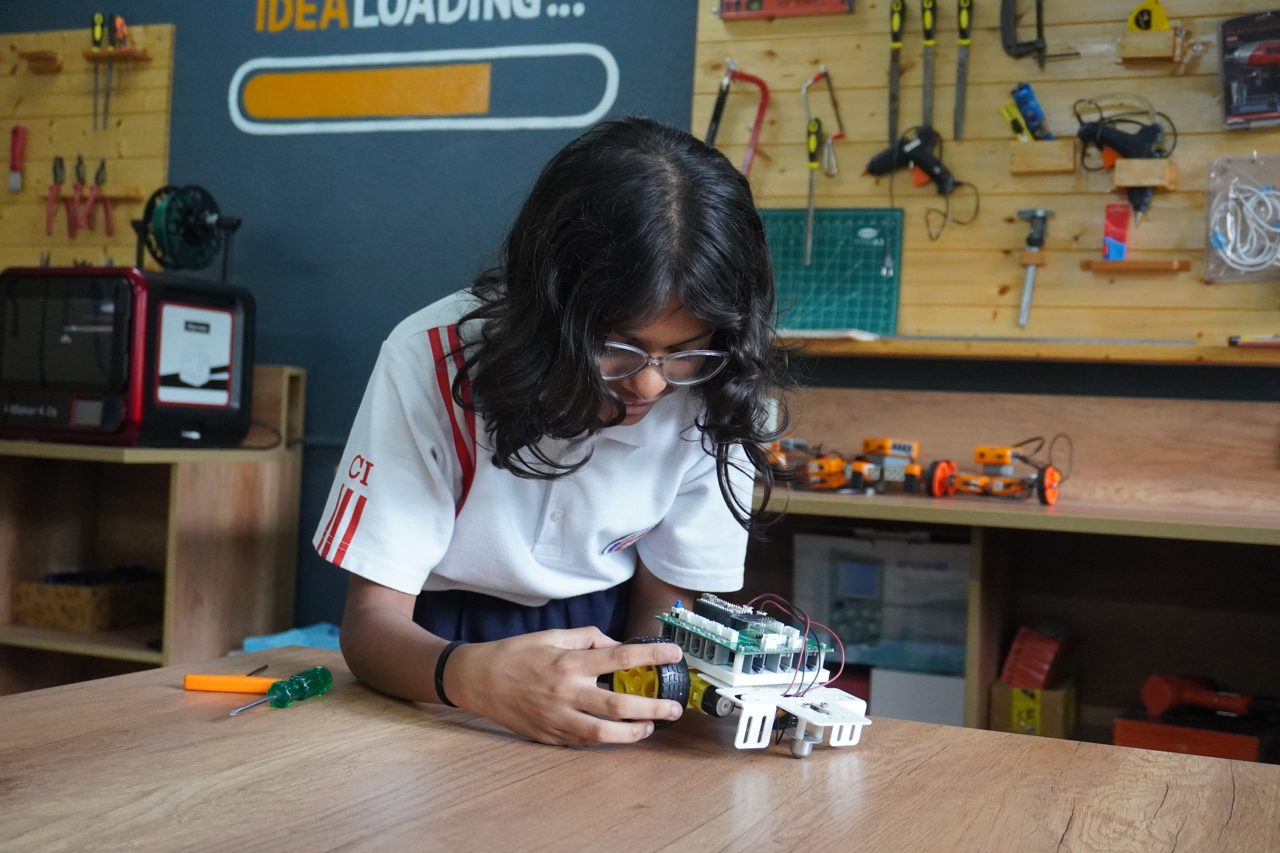
Robotics & electronics: grade-appropriate robotics kits and controllers, sensors, motors and basic components — the backbone of most sessions.
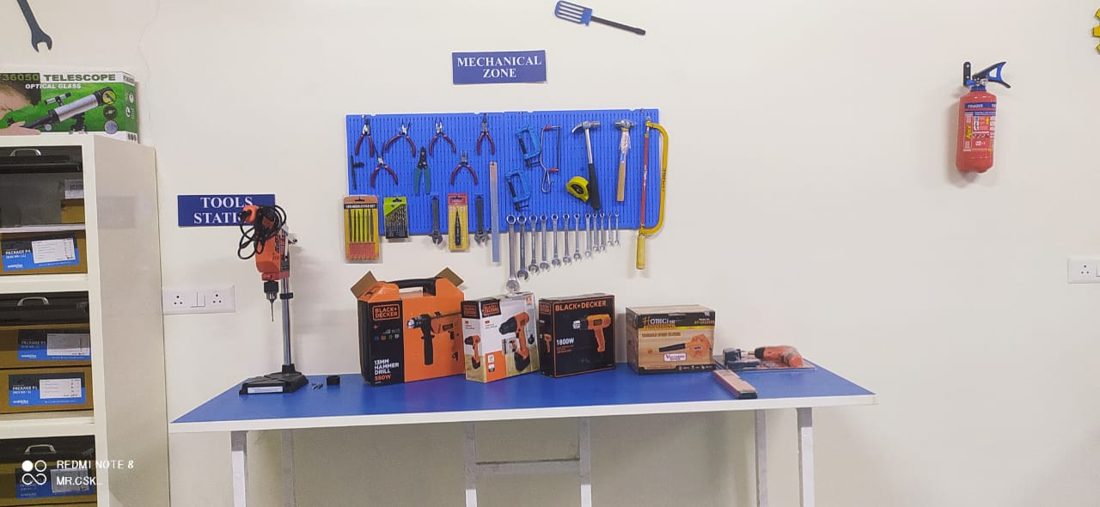
Making & prototyping: hand tools, a tool station, model-making materials, and — when you are ready — an entry 3D printer.
Coding & computing: the laptops/desktops above, running free block-to-text coding platforms; no premium software required to start.
Science & maths manipulatives: activity kits and models that keep the “S” and “M” in STEM real rather than an afterthought.
A common design mistake is over-buying advanced hardware that a beginner class can’t use, while under-buying the boring consumables — batteries, spare parts, storage boxes — that keep sessions running. Weight your first budget toward robustness and quantity, not toward one flagship machine.
STEM lab cost in India: realistic 2026 ranges
Costs vary with room size, kit depth and how much furniture and electrical work the space needs. Indicative ranges for planning — not quotes — look like this:
Entry-level (primary, ~20–30 students): around ₹3–6 lakh* for a starter kit set, basic furniture and storage.
Standard STEM lab (secondary): around ₹7–15 lakh* for a fuller equipment range, more workstations and a proper display zone.
Annual upkeep (AMC / consumables): budget roughly 10–15% of the initial spend per year so the lab keeps working.
*Indicative ranges only. Actual cost depends on your space, existing infrastructure and curriculum depth — ask for an itemised proposal rather than a single headline number. For a deeper cost model on the mandated side, see our Composite Skill Lab cost breakdown.
The design decisions that decide whether the lab gets used
Equipment rarely kills a lab; the operating model does. Three design-time choices matter more than the kit brand:
Timetable it, don’t “offer” it. A lab with fixed periods on the timetable gets used. A lab available “whenever teachers want” slowly gets used by no one.
Train the teacher before the hardware arrives. Unused labs almost always trace back to a teacher who was handed kits without support. Grobots has trained 650+ teachers to run robotics sessions, and the pattern is consistent: confident teachers keep the room busy. If you’re unsure whether your ICT staff can run it, read who can teach a robotics lab.
Design for visible output. Rooms that display finished projects and enter competitions build momentum — students from labs we run (for example at Bhavans Nagpur) have reached national-level robotics rounds, and that visibility is what sustains the programme through Year 2 and beyond.
Frequently asked questions
What is the ideal size for a school STEM lab?
Plan for about 600–1,000 sq ft for a dedicated lab serving a full class of 30, or 400–600 sq ft for a compact or shared setup. The priority is enough clear table space and circulation for three working zones, not a fixed number.
How much does it cost to set up a STEM lab in India?
Indicative ranges run from about ₹3–6 lakh for an entry-level primary lab to ₹7–15 lakh for a fuller secondary lab, plus roughly 10–15% a year for upkeep. Costs depend heavily on space, existing electrical work and how deep your kit ratio goes, so ask for an itemised proposal.
What is the difference between a STEM lab and a Composite Skill Lab?
A STEM lab is a broad experiential space for science, technology, engineering and maths projects. A Composite Skill Lab is a specific CBSE-mandated facility tied to affiliation requirements. A well-designed STEM lab can be built to also satisfy the mandate — see our Composite Skill Lab guides for the compliance detail.
What equipment is essential for a STEM lab?
At minimum: grade-appropriate robotics and electronics kits, hand tools and prototyping materials, laptops or desktops for coding and CAD, and science/maths manipulatives. Add advanced hardware like 3D printers once the basics are in steady use.
Why do so many school labs stop being used after the first year?
Almost always because the lab wasn’t timetabled and the teacher wasn’t trained — not because of the equipment. Designing in fixed periods, teacher training and a visible-output culture is what keeps a lab busy long term.
Planning a STEM lab for your school?
Grobots designs, equips and supports school STEM, robotics and Composite Skill Labs end to end — layout, kits, curriculum and teacher training — so the room is actually used, not just installed. Explore our STEM Lab solution and CBSE support, or get a tailored plan and honest budget for your space.
👉 Get a lab proposal | Prefer WhatsApp? Message us here
Authority reference: National Education Policy 2020, Ministry of Education — experiential and hands-on learning provisions.

