Composite Skill Lab vs AI Robotics Lab vs ATL (2026)
Only one of these three labs is compulsory — but you don't have to build them separately. If your school is CBSE-affiliated, the Composite Skill Lab (CSL) is a mandate with a hard deadline of 22 August 2027. The AI & Robotics Lab is the lab students actually use every week — from Grade 3 upward — and the one parents notice. The Atal Tinkering Lab (ATL) is optional government funding on top. The smart move for most schools is to treat this as one decision, not three: build an AI & Robotics Lab and upgrade it into a compliant CSL — or, if space is tight, make your mandatory CSL the home where AI and robotics activities run.
Most principals we meet are told all three are "basically the same thing." They aren't — they differ in who mandates them, who pays, how much space they need, and what happens if you don't have one. But they do overlap enough that a school planning properly can satisfy the mandate and get a real robotics programme out of the same room and the same budget. Here's the honest comparison, and how we'd sequence it.
The one-line difference
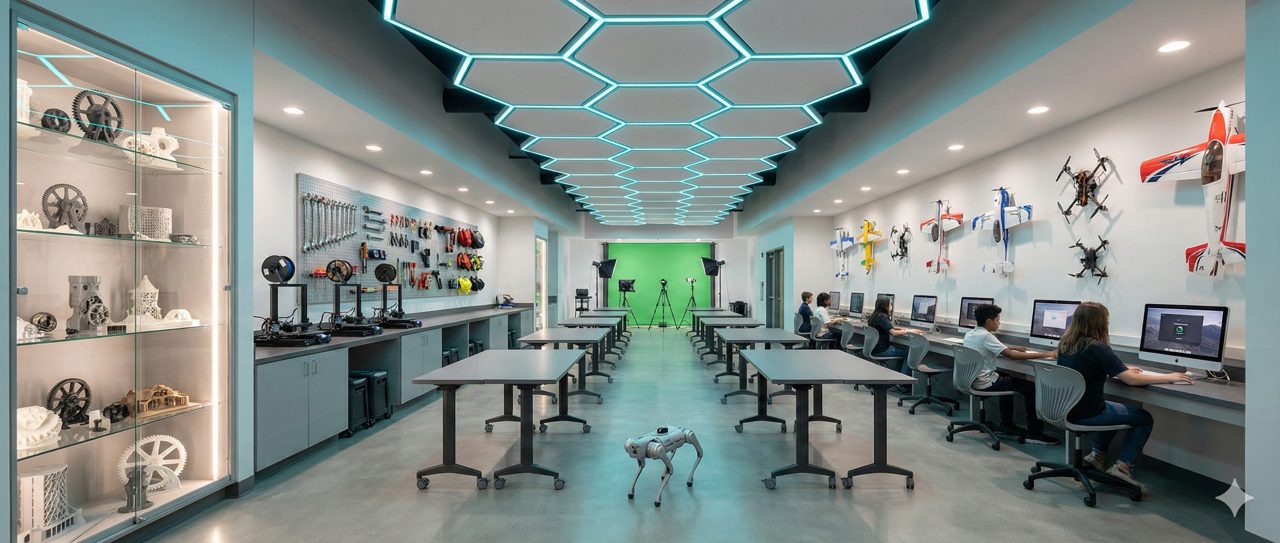
Composite Skill Lab (CSL): CBSE-mandated compliance space for skill subjects. You must have it. Every affiliated school will make provision for it — which is exactly why it's the room to build well.
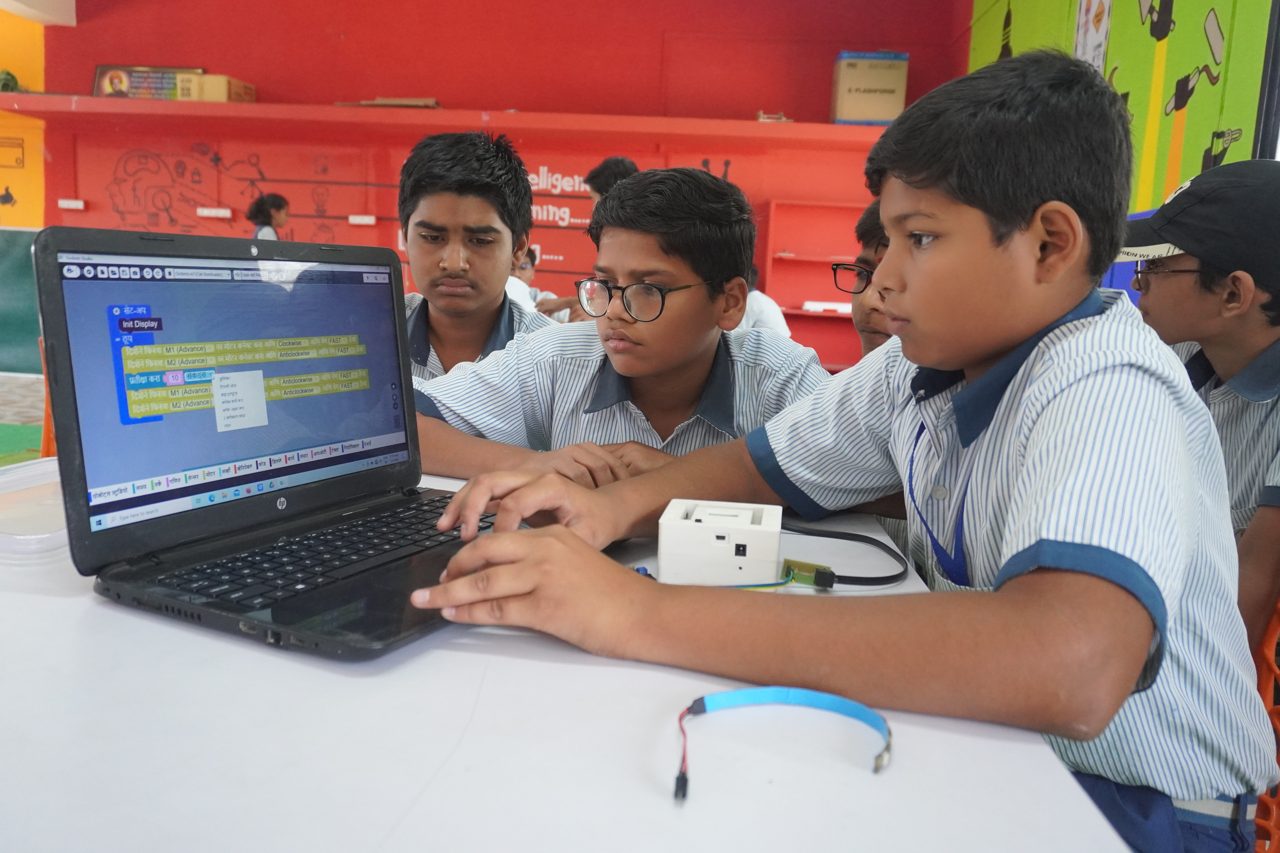
AI & Robotics Lab: A depth lab for coding, AI and robotics that runs across Grades 3–12 — block coding in the primary years, the Classes 6–8 coding-and-AI modules CBSE now expects, and Code 417 (Classes 9–10) / Code 843 (Classes 11–12) at the senior level, plus competition teams. Optional on paper, but it's what students use and what parents see.
Atal Tinkering Lab (ATL): Government-funded innovation space under the Atal Innovation Mission. You apply for it; you may not get it — and it can't replace your CSL.
Composite Skill Lab: the mandate you're building anyway
CBSE issued Circular No. Skill-75/2024 (23 August 2024) directing all affiliated schools to set up a Composite Skill Lab. Existing schools have three years from that date — so 22 August 2027 — and new or expanding schools need it in place at the affiliation stage. CBSE's own Guidelines for setting up Composite Skill Lab in Schools is the source document; read it before you take any vendor's word for what's required.
What the CSL actually is
Space: one lab of ~600 sq ft covering Classes VI–XII, or two labs of ~400 sq ft each (VI–X and XI–XII)
Design principle: the "three forms of work" — work with materials, work with machines/tools, work with people/services — must all be accommodated in one organised space
Sectors covered: multi-sector, drawn from the skill subjects the school offers — Electronics, IT/ITeS, Agriculture, Healthcare, Apparel, Food Production, Beauty & Wellness, AI, AVGC and others
Not: a computer lab with a new signboard. Inspectors look for tool stations, storage, workbenches and safety, not just PCs
The point most schools miss: AI is one of the sectors CBSE names for the CSL, and its electronics/IT zone is a natural home for robotics. You are required to build a multi-sector practical room regardless — so the real question isn't "CSL or robotics lab," it's "how robotics-capable should the CSL I have to build anyway be?" We break the money side down in Composite Skill Lab Cost in India and the circular line by line in CBSE Circular Skill-75/2024 Explained.
AI & Robotics Lab: the lab we actually recommend leading with
Nothing forces you to build an AI & Robotics Lab — but it's the lab that carries your coding and AI teaching all the way from Grade 3 to Grade 12, and the one most likely to run every single week rather than only when an inspector visits. It's what changes what students can actually do, and it's what parents see on a school tour.
Crucially, it isn't a senior-secondary-only lab. It's where the whole CBSE coding-and-AI progression happens:
Grades 3–5: block / visual coding — the foundation, taught through games, stories and simple robotics
Grades 6–8: the coding and Artificial Intelligence modules CBSE now expects at middle-school level (part of the NEP-aligned skill modules) — block-based coding, introduction to AI, robotics and automation. The AI & Robotics Lab is where this requirement actually gets fulfilled
Grades 9–10: CBSE Code 417 (Artificial Intelligence) and deeper robotics
Grades 11–12: Code 843, Python, ML and project work
So when a school says "we'll worry about AI when we reach Class 9," it's already behind — the block-coding and AI-introduction expectation lands in Classes 6–8, and the lab is what makes that teachable. What separates a working robotics lab from an expensive shelf of kits is not the hardware — it's a grade-wise curriculum that fits a 40-minute period and a teacher who can actually run it. See our AI & Robotics Lab and the Grobots kit range for how the progression is built across Grades 3–9.
The upgrade path (our recommended route)
Because the CSL is a superset of what a robotics lab needs — tool stations, workbenches, an electronics/IT bay, project storage, safety and power — an AI & Robotics Lab can be upgraded into a compliant Composite Skill Lab by adding the remaining sector provisions the CSL requires. Schools that start with robotics get the lab students want now, serve the Grade 3–12 coding/AI progression from day one, and grow the same room into the mandated CSL before the 2027 deadline — one room, one budget line, two boxes ticked.
"We don't have space for a robotics lab" — the CSL is your answer
This is the most common objection we hear, and it has a clean solution. If a school genuinely has no spare room for a separate AI & Robotics Lab, it should stop looking for one — because it is already required to make provision for a Composite Skill Lab. Make that mandatory CSL the primary venue where AI and robotics activities are conducted.
You are building the room either way. Designed correctly, its electronics/AI/IT zone runs your Grade 3–5 block-coding sessions, your Classes 6–8 coding and AI modules, your Code 417 practicals and your competition prep — no second room, no duplicate spend. For space-constrained schools this isn't a compromise; it's the most efficient version of the plan. The CSL becomes the home base, and robotics is one of the things that happens in it.
Atal Tinkering Lab: funding on top, not a substitute
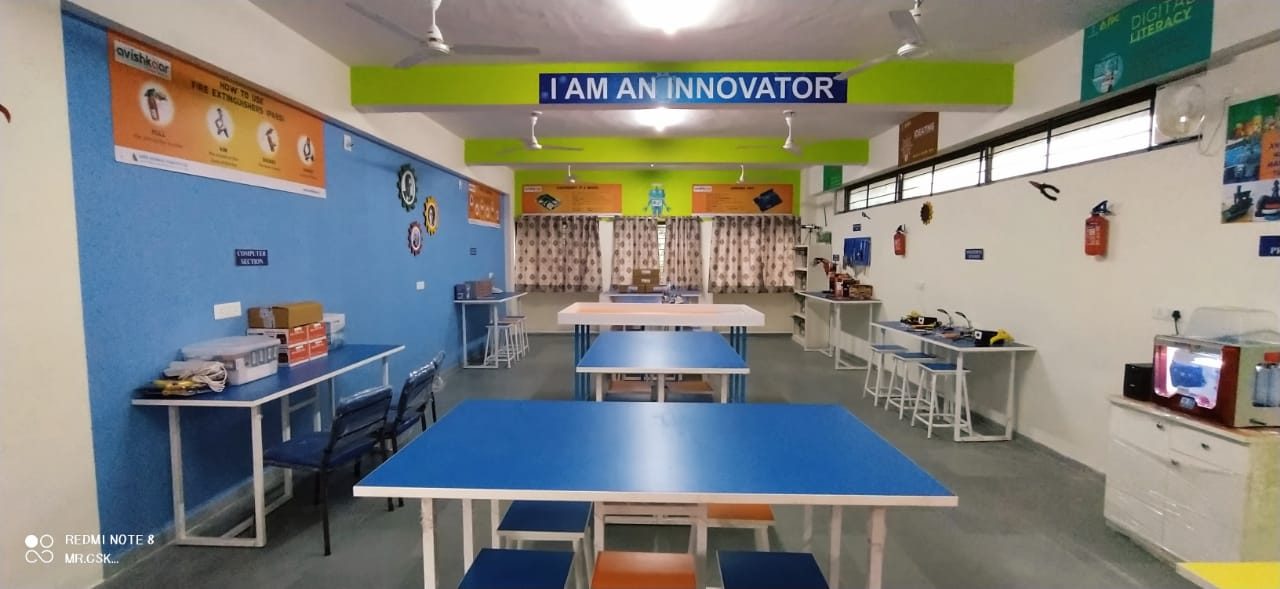
The ATL is run by the Atal Innovation Mission (NITI Aayog). Selected schools receive a grant-in-aid of ₹20 lakh per school — ₹10 lakh as one-time establishment cost and ₹10 lakh towards operations and maintenance — disbursed over five years (typically ₹12 lakh in year one, the remaining ₹8 lakh across the next four years). Those figures come from AIM's own grant-in-aid utilisation guidelines.
Two things schools get wrong about the ATL:
It is not a substitute for the CSL. You may use ATL equipment to support skill subjects like Electronics and Mechatronics, but an ATL cannot be converted into — or counted as — your Composite Skill Lab. If you have an ATL, you still need a CSL.
The grant is competitive and time-bound. You apply, you wait, you may not be selected. Planning your 2027 compliance around an ATL grant that hasn't arrived is how schools end up scrambling in the final quarter. Treat it as a bonus, never the plan.
Side-by-side: mandate, money, space, risk
Composite Skill Lab
Mandated by: CBSE, Circular Skill-75/2024
Deadline: 22 Aug 2027 (existing schools); at affiliation for new schools
Funded by: the school
Space: 600 sq ft (or 2 × 400 sq ft)
Typical outlay: CBSE indicates a ₹3–6 lakh minimum band; real proposals commonly land ₹6–15 lakh depending on sectors chosen and what equipment you already own*
Risk if absent: affiliation-level compliance risk
AI & Robotics Lab
Mandated by: nobody — curriculum-driven choice, but the one students use most
Grades served: 3–12 — block coding (3–5), coding & AI modules (6–8), Code 417/843 (9–12)
Funded by: school budget, CSR, or activity fee
Space: a standard classroom (400–600 sq ft) works — or run it inside the CSL
Typical outlay: tiered — a starter lab is a fraction of an advanced one; the recurring cost is curriculum, kits and teacher capability, not one-time hardware*
Risk if absent: no compliance risk; a real gap in differentiation and in delivering the Classes 6–8 coding/AI expectation and Code 417
Upgrade path: can be grown into a compliant CSL by adding the remaining sector provisions
Atal Tinkering Lab
Mandated by: nobody — voluntary application
Deadline: application windows announced by AIM
Funded by: AIM grant of ₹20 lakh over 5 years (₹10L setup + ₹10L O&M)
Space: a dedicated room, typically ~1,500 sq ft per AIM guidance
Typical outlay: covered by grant if selected; school funds any shortfall and running costs beyond it
Risk if absent: none for compliance — you simply miss the funding and the innovation programme
*Indicative ranges only. Actual cost depends on sectors, room condition, civil work and existing equipment. We quote after a room survey, not before.
How we'd sequence it
The sequence is boring and correct:
1. Start with the AI & Robotics Lab if you want impact this academic year — it's the lab students use weekly, it carries coding and AI across Grades 3–12, and it's the one that differentiates you. Build it so it can grow.
2. Upgrade it into your CSL before 2027. Add the remaining sector provisions the mandate needs; you're extending a room you already have, not starting over. If you'd rather build the CSL first, build it AI & robotics-capable from day one — same destination.
3. Short on space? Make the CSL the base. You must provide for a CSL regardless — run your AI and robotics activities inside it rather than hunting for a room you don't have.
4. Apply for an ATL if you're eligible — free money is free money — but never make it the plan, and remember it doesn't count toward the mandate.
Before any of this, do a room survey and audit what you already own. Most schools discover 20–40% of the CSL requirement is already sitting in the science lab, ICT lab or art room — and that planning the robotics lab and the CSL together, rather than a year apart, is the single biggest saving available to them.
FAQ
From which grade should robotics and coding start?
Grade 3. CBSE's progression is block/visual coding in Classes 3–5, coding and an introduction to AI in Classes 6–8, and Code 417/843 in Classes 9–12. An AI & Robotics Lab supports all of it — waiting until Class 9 means the Classes 6–8 coding-and-AI expectation goes undelivered.
Can I run AI and robotics activities inside my Composite Skill Lab?
Yes — and for many schools that's the smartest option. AI is one of the sectors CBSE lists for the CSL, and its electronics/IT zone naturally hosts robotics and coding from Grade 3 upward. If you lack space for a separate robotics lab, the mandatory CSL is the room to run those activities in.
Can an AI & Robotics Lab be upgraded into a Composite Skill Lab?
Yes. The CSL is broadly a superset of a robotics lab — same tool stations, workbenches, electronics bay and storage — so an existing AI & Robotics Lab can be grown into a compliant CSL by adding the remaining sector provisions, rather than built from scratch.
Is an Atal Tinkering Lab enough to meet CBSE's Composite Skill Lab requirement?
No. An ATL can support certain skill subjects (Electronics, Mechatronics), but it does not satisfy the CSL requirement and cannot be converted into one. Schools with an ATL still need a Composite Skill Lab.
Is the Composite Skill Lab mandatory for all CBSE schools?
Yes, for affiliated schools. Circular Skill-75/2024 gives existing schools three years from 23 August 2024 — i.e. until 22 August 2027 — and new schools must have it at the affiliation stage.
How much space does each lab need?
CSL: 600 sq ft, or two labs of 400 sq ft each. ATL: a dedicated room, typically around 1,500 sq ft per AIM guidance. AI & Robotics Lab: a normal classroom of 400–600 sq ft is workable, or it can run inside the CSL.
How much grant does an ATL school receive?
₹20 lakh in total — ₹10 lakh one-time establishment cost and ₹10 lakh for operations and maintenance — released over five years, with ₹12 lakh typically in the first year.
Plan the room before you buy the boxes
Nine out of ten lab budgets go wrong at the layout stage, not the purchase stage. Send us your room dimensions and the skill subjects you offer, and we'll tell you what you actually need — whether that's an AI & Robotics Lab you upgrade later, or a CSL built robotics-ready from day one — including what you can reuse, before anyone quotes you anything.
Get a proposal for your lab → | WhatsApp us: +91 62635 56790
Further reading: Composite Skills Lab · AI & Robotics Lab · For CBSE Schools · Case study: Bhavan's Nagpur

