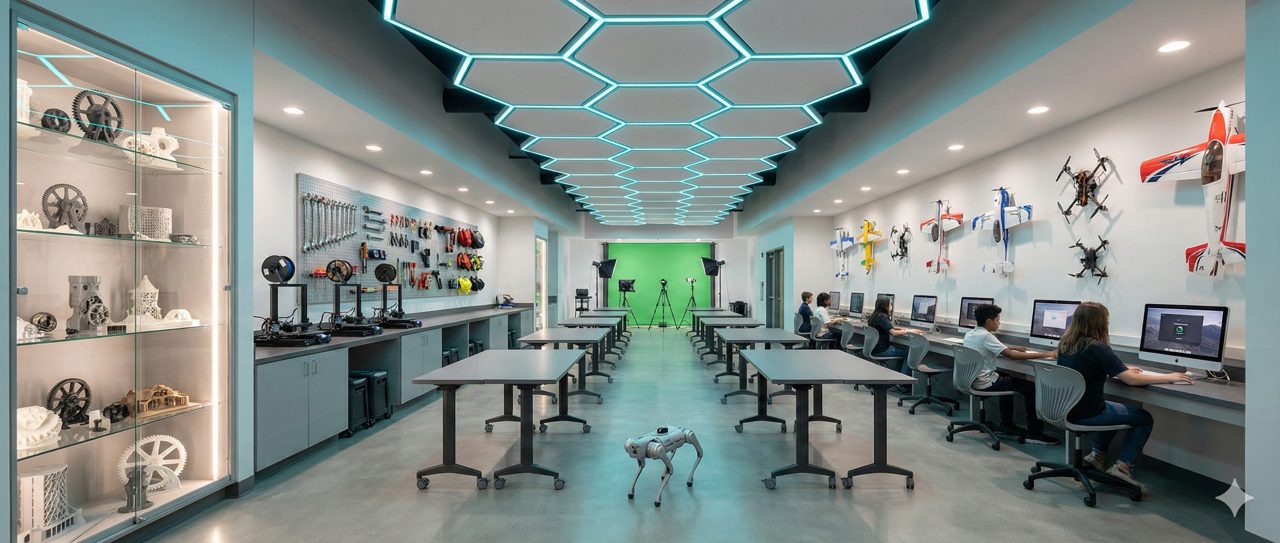
Composite Skill Lab Cost in India: 2026 Breakdown
How much a composite skill lab costs depends on two things above all: which skill sectors you choose to equip, and how much usable equipment your school already has. There is no single sticker price — a lab built around basic electronics and IT looks nothing like one with robotics, 3D printing and AI stations, and a school with existing computers spends far less than one starting from an empty room.
As a planning anchor: CBSE's guidelines point to a baseline of roughly ₹3–6 lakh — but treat that as the minimum, a compliance floor. A realistic, well-equipped lab proposal usually lands between ₹6 lakh and ₹15 lakh once you factor in the sectors and equipment depth you actually want, plus around ₹1–2.5 lakh a year to keep it running. This is an honest, line-by-line breakdown so you can budget for the lab you'll actually use — not just the one that clears inspection.
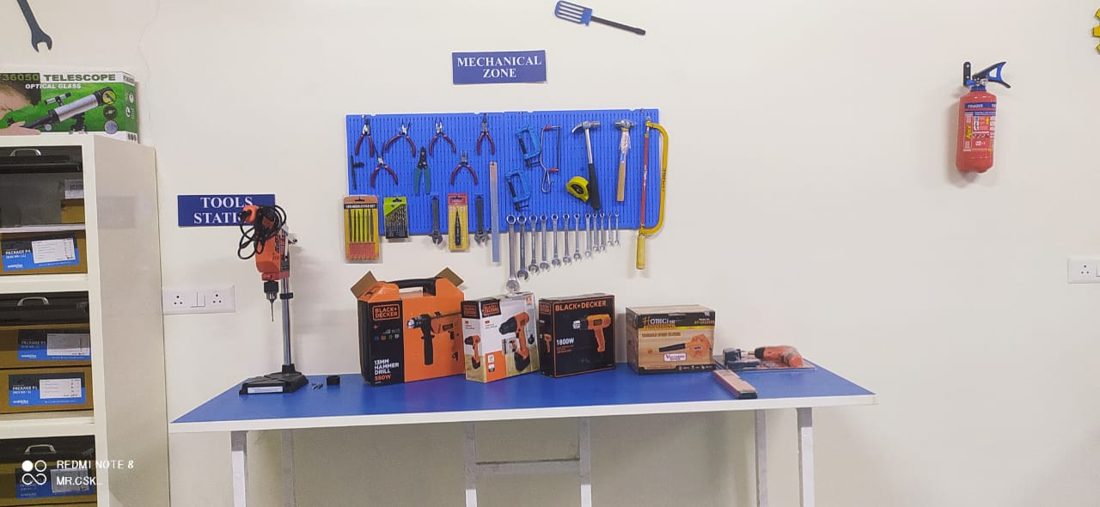
What actually drives composite skill lab cost
CBSE's Circular Skill-13/2026 (which builds on Circular Skill-75/2024) prescribes the lab, but leaves equipment choices "suggestive." That flexibility is exactly why quotes vary so widely. Five factors move your final number:
Skill sectors chosen. The biggest single driver. Electronics and IT are relatively affordable; robotics, drones, AI vision and 3D printing add cost quickly. More sectors means more stations and higher spend.
Equipment already in the school. Existing computers, a projector or usable furniture directly reduce the quote. A school starting from scratch pays for everything.
Room size & civil work. CBSE requires a single 600 sq. ft. lab (Classes VI–XII) or two 400 sq. ft. rooms. Electrical points, flooring, painting and safety fittings are a real cost if the room isn't ready.
Equipment depth & quality. Entry-level kits versus durable, advanced stations that survive years of student use.
Curriculum, software & teacher training. A lab with no curriculum and no trained teacher is the single most common reason labs go unused by Year 2.
The "three forms of work" your budget has to cover
NCF-SE 2023 categorises vocational work into three forms, and your lab has to touch all three — which is why a composite lab costs more than a single-subject room:
Work with Life Forms — agriculture, horticulture, health and wellness (hydroponics kits, basic bio/health tools).
Work with Machines & Materials — electronics, robotics, carpentry, apparel, 3D printing (the equipment-heavy, most expensive form).
Work in Human Services — retail, IT/ITeS, financial literacy, design (largely computers, software and light props).
You are equipping three domains in one space, not one — the sectors you pick within each form decide where you land in the range.
Composite skill lab cost breakdown (2026 indicative)
Realistic, all-in ranges by ambition level. The compliance baseline is CBSE's minimum floor; most schools that want a lab teachers use daily land in the standard or advanced band. Ranges are indicative for planning only.
Compliance baseline — CBSE minimum · ₹3–6 lakh all-in
Civil, electrical & safety fit-out: ₹30k–60k
Furniture, workbenches & storage: ₹40k–70k
Skill kits & equipment (all 3 forms): ₹1.6L–2.8L
Computers / AI hardware: reuse existing
Curriculum, software & teacher training: ₹40k–70k
Standard — well-equipped lab · ₹6–10 lakh all-in
Civil, electrical & safety fit-out: ₹60k–1L
Furniture, workbenches & storage: ₹80k–1.2L
Skill kits & equipment (all 3 forms): ₹3L–5L
Computers / AI hardware: ₹1L–2L
Curriculum, software & teacher training: ₹70k–1.2L
Advanced — robotics, AI & 3D printing · ₹10–15 lakh+ all-in
Civil, electrical & safety fit-out: ₹1L–1.5L
Furniture, workbenches & storage: ₹1.2L–1.8L
Skill kits & equipment (all 3 forms): ₹5L–9L+
Computers / AI hardware: ₹2L–3.5L
Curriculum, software & teacher training: ₹1.2L–2L
The CBSE ₹3–6 lakh figure is a minimum; your actual proposal depends on the sectors and equipment you choose and what your school already owns. Grobots quotes only after a site assessment — we don't price blind.
The recurring cost most quotes hide: AMC & training
Setup is one-time; a working lab is not. Budget for these every year:
Annual Maintenance (AMC). Industry norm is around 15–20% of equipment value per year, usually from Year 2. On a ₹4L equipment spend that's ₹60k–80k a year for repairs, spares and software updates.
Consumables. 3D-printer filament, electronic components, craft materials — modest but constant.
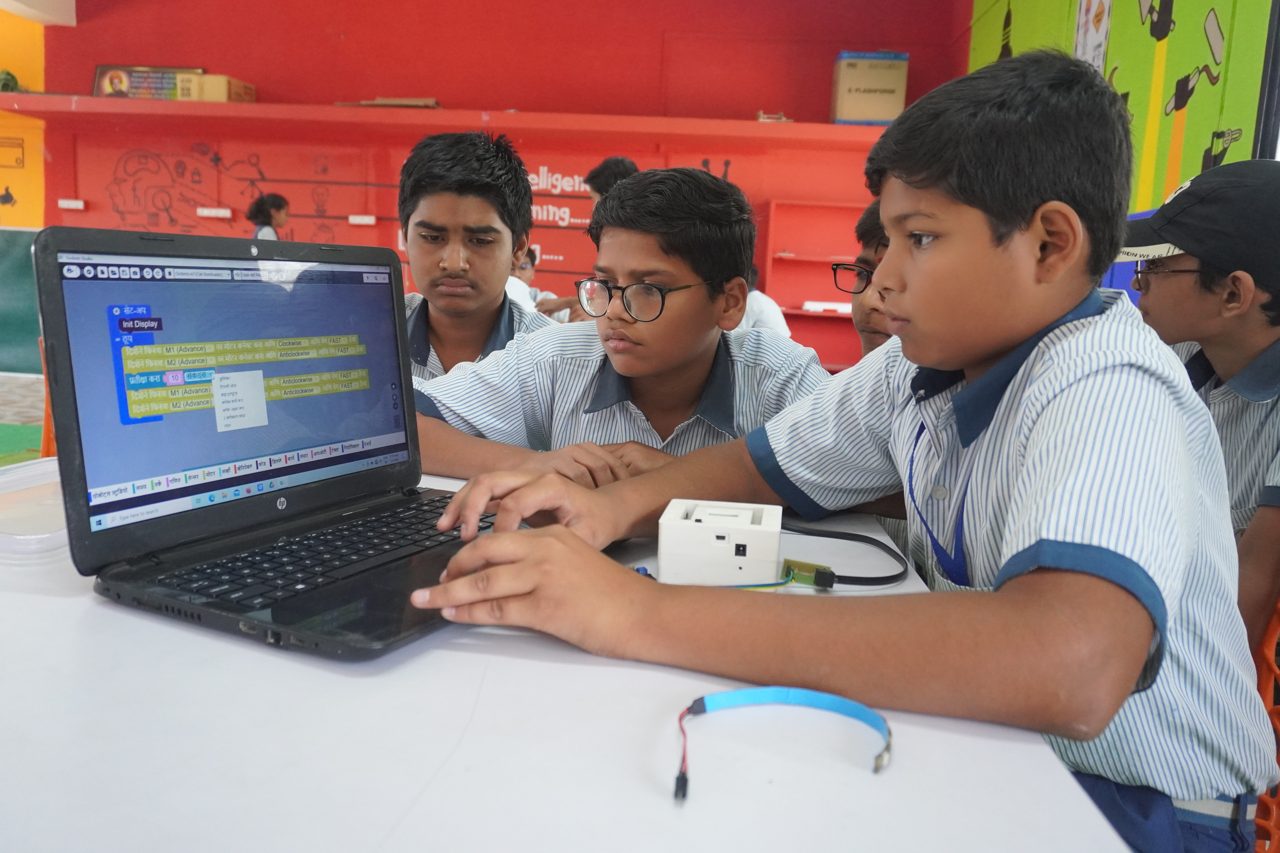
Teacher training & refreshers. The difference between a lab used weekly and a lab used for the inspection photo.
A realistic recurring line is ₹1–2.5 lakh per year. Schools that skip this are the ones whose labs stop being used within 18 months.
How to phase the spend before the 2027 deadline
Now: ready the room and buy the compliant core (furniture + one strong kit per form of work). This satisfies the mandate and gets teachers started.
Year 2: deepen the "Machines & Materials" stations (robotics, 3D printing, AI) once teachers are confident.
Ongoing: fund AMC and training as a fixed annual line, not an afterthought.
For the full compliance picture — room size, the three forms of work and the equipment sectors — see our explainer on CBSE Circular Skill-75/2024 and the step-by-step how to set up a composite skill lab guide.
FAQ
How much does a composite skill lab cost for a CBSE school?
It depends on the skill sectors you choose and the equipment your school already has. CBSE's guidelines suggest a baseline of ₹3–6 lakh, but that is the minimum end. A realistic, well-equipped lab proposal usually runs ₹6–15 lakh, plus ₹1–2.5 lakh a year for maintenance and training.
Why is the actual quote higher than CBSE's ₹3–6 lakh figure?
The ₹3–6 lakh baseline is a compliance floor built on minimal kits and reused infrastructure. Once you add robotics, 3D printing, AI hardware or more skill sectors — the things that make the lab genuinely useful — the proposal typically moves into the ₹6–15 lakh band.
Is a composite skill lab mandatory for all CBSE schools?
Yes. Per CBSE Circular Skill-75/2024 and the 2026 guidelines, affiliated schools offering Classes VI–XII must establish a composite skill lab by 22 August 2027.
What is the minimum room size for a composite skill lab?
A single lab of at least 600 sq. ft. for Classes VI–XII, or two rooms of 400 sq. ft. each — one for VI–X and one for XI–XII.
Can we set up the lab in phases?
Yes. Buy the compliant core now (furniture plus one kit per form of work), then deepen equipment in Year 2. Just keep AMC and training funded from the start.
Get a transparent, room-specific proposal
We assess your room and existing equipment, then give you an honest, itemised quote based on the skill sectors you want — no blind pricing, no forced upsells.

